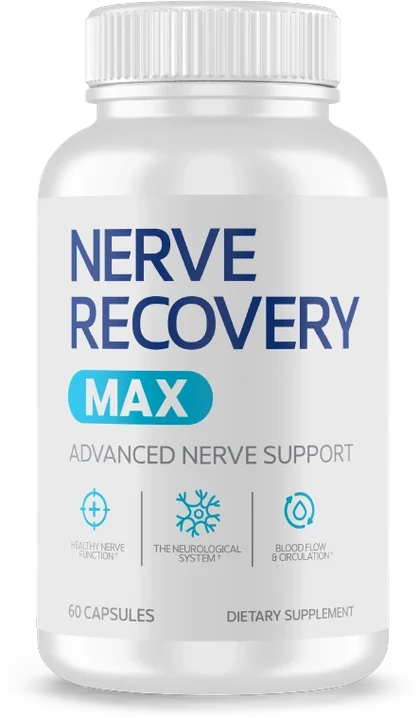
Official stocking desk - Nerve Recovery Max 2 capsules a serving · 30 per bottle 10 amounts printed, none hidden in a blend Price and terms: not published here
Nerve Recovery MaxMynerverecoverymax · authorized retailer See priceon the seller’s page

Product information

Nerve Recovery Max, a ten-ingredient capsule for everyday nerve comfort

Nerve Recovery Max is a capsule supplement made to support everyday nerve comfort. The label directs two capsules daily with 6-8 oz of water, and a bottle holds 60, so it lasts 30 days. Every ingredient has its own printed amount, from 400 mg of alpha lipoic acid and 150 mg of benfotiamine to vitamins D3, B12 and folate, with no proprietary blend.

  • 10 amounts printed, none in a blend
  • 2 capsules a serving, 30 servings a bottle
  • Price and terms shown at checkout, before you pay

Sources read on October 12, 2026 · price and guarantee terms shown at checkout · who checked this page

Nerve Recovery Max bottle, 60 capsules
A serving is 2 capsules, the label says to take it daily, and the bottle holds 30 servings, so one bottle lasts 30 days.
The Nerve Recovery Max Supplement Facts panel, line by line: every declared ingredient, its amount per two-capsule serving, the percentage of the Daily Value the panel prints, the Daily Value FDA publishes, and the amount in one capsule. Six of the ten have no Daily Value and carry the panel's double asterisk.
As printed on the panelAmount per serving% DV printedFDA Daily ValuePer capsule
Vitamin D3 (as Cholecalciferol)20 mcg100%20 mcg10 mcg
Vitamin B6 (as Pyridoxine hydrochloride)1.7 mcg100%1.7 mg0.85 mcg
Folate (230 mcg folic acid)383 mcg DFE96%400 mcg DFE191.5 mcg DFE
Vitamin B12 (as Methylcobalamin)2 mcg83%2.4 mcg1 mcg
Alpha Lipoic Acid400 mg**Not established200 mg
Benfotiamine150 mg**Not established75 mg
Acetyl L-Carnitine50 mg**Not established25 mg
Ashwagandha Powder (Root)25 mg**Not established12.5 mg
Broccoli Powder (Brassica Oleracea)(leaf)25 mg**Not established12.5 mg
Turmeric Powder (Root)25 mg**Not established12.5 mg

Serving Size 2 Capsules · Servings Per Container 30 · ** Daily Value (DV) not established. · Suggested use: two capsules daily with 6-8 oz of water. The whole label, caution included, is in Check 01.

GMP good manufacturing practice markGMO free markMade in the USA markForeign and domestic ingredients markMoney-back satisfaction mark

Seals and marks as supplied with this stock: GMP, GMO free, made in the USA, foreign and domestic ingredients, and money back.

The short answer

Nerve Recovery Max is a capsule supplement sold as nerve-comfort support. Two capsules daily with 6-8 oz of water is the label serving, and a bottle holds 60, enough for 30 days. All ten ingredients carry their own printed amount, led by alpha lipoic acid and benfotiamine. It is not a drug and not a neuropathy medicine; ask a doctor about any numbness or tingling.

Mynerverecoverymax is an official stocking desk for Nerve Recovery Max. We hold stock, publish what the label and the seller actually print, and take orders through the seller’s checkout. We did not formulate this product and we did not test it.

The 60-second version

Read time under a minute
  1. It is a capsule, and the serving is 2 capsules. 60 capsules in the bottle and 30 servings in it, so a bottle is 30 days at one serving a day. The panel does not say to take one serving a day, and this site does not say it either.
  2. Credit where it is owed: 10 declared things, 10 printed amounts, no proprietary blend. Nothing on this label has to be bounded, estimated or inferred, because nothing on it is hidden. Every amount on this panel is the manufacturer’s own printed figure, so the arithmetic on this page is a check rather than an estimate.
  3. Three of the four percentages recompute exactly. Vitamin D3 20 mcg against a 20 mcg Daily Value is 100%. Folate 383 mcg DFE against 400 mcg DFE is 95.75%, printed as 96%. Vitamin B12 2 mcg against 2.4 mcg is 83.33%, printed as 83%. Check 03 shows the table.
  4. The fourth is wrong by a factor of 1,000. Vitamin B6 (as Pyridoxine hydrochloride) is printed at 1.7 mcg with 100% beside it. The published Daily Value is 1.7 mg. 1.7 mcg is 0.1% of that, which rounds to 0%. Check 02 quotes the regulation.
  5. The folate line is right, and this page says so. 230 mcg of folic acid divided by the 0.6 factor the regulation publishes is 383.33, which is the 383 mcg DFE the panel prints. Check 04 works it.
  6. B6 is also the one ingredient here that federal sources connect to causing nerve damage, at doses nothing like this one. The Tolerable Upper Intake Level is 100 mg a day and the intended 1.7 mg is about one 59th of it. Check 05 handles that carefully, and does not claim this bottle will harm anyone.
  7. Benfotiamine at 150 mg is inside the range a federal source publishes for this condition. That range is 120 to 900 mg a day, from three studies of diabetic neuropathy symptoms. It is the one amount on the panel that lands, and Check 06 says so.
  8. Alpha Lipoic Acid at 400 mg sits below the 600 mg a day used in trials of 6 months to 4 years in people with diabetic polyneuropathy. That is a gap between a printed amount and a studied one, not a verdict on the product.
  9. Acetyl L-Carnitine at 50 mg is measured against a dose for a different condition. The only doses NIH ODS publishes on its carnitine page are 1 to 3 grams a day for trials in Alzheimer’s disease and other dementias, and the page does not mention neuropathy at all.
  10. Six of the ten are federally silent. No federal source this desk opened connects them to nerve pain. One of them, broccoli powder, has no federal fact sheet of any kind. Check 07 prints all six.
  11. The agency that owns this condition has no supplement recommendation. NIDDK: “Diabetes experts have not made special recommendations about supplements for people with diabetes.” NIDDK Check 08 is that sentence and what follows from it.
  12. There is no rating on this site and none in its code. Ten named reviews and a score of 4.4 on a 5-point scale were supplied with this stock. The supplied distribution produces 4.42, which reconciles, and this page says so rather than hunting for a fault.
  13. No price and no guarantee terms are published. No price, pack size or discount ladder is published in any material supplied with this stock. The sales page forms the order and shows the figure before you pay, and that figure is the only one that counts. Check 10 is about that and nothing else.

Check 01

What this panel does right, and why that comes first

This panel hides nothing. There is no proprietary blend, and every one of the ten things declared on it carries its own printed amount. That is genuinely rare and it is said first. Which is also why the single line that is wrong matters as much as it does.

The Nerve Recovery Max panel as supplied. Everything this site says is on the panel is on this picture, and where JavaScript runs it opens full screen and can be enlarged far enough to read every line.

Read it from the top. The serving is 2 Capsules and the container holds 30. Then four nutrient lines, each with a weight and a percentage of the Daily Value against it. Then six more ingredients, each with a weight of its own and the panel’s double asterisk where a percentage would go. Then the footnote, as printed: ** Daily Value (DV) not established.

What is not there is the thing that usually takes a page of its own. There is no proprietary blend. No group of ingredients shares a single declared weight, so no figure on this site has to be derived from an ordering rule, and nothing here is a maximum standing in for an amount. The manufacturer printed ten amounts and kept none of them back. This page credits that before it checks anything, because a page that only ever finds fault is not checking a label. It is campaigning, and a reader cannot tell the difference between a campaign and a check unless the check sometimes comes out clean.

The Nerve Recovery Max label unwrapped, showing the front panel, the Supplement Facts panel and the Other Ingredients and distributor lines

Select a number on the label, or use the arrow keys.

The four vitamin lines

Four nutrients with a Daily Value, each with a printed amount and a printed percentage. Three of the percentages recompute. Check 02 is the fourth.

The six weight-only lines

Six more ingredients, each with its own printed milligram figure and the panel’s double asterisk in the percentage column, because no Daily Value is established for any of them.

No proprietary blend

There is no blend line on this panel and no group of ingredients sharing one weight. That is the single most useful thing about it.

The Distributed By block

The bottle reads Nerve Recovery Max, Akron, OH 44301 with the number (888) 869-0440. That is not this site and not the order desk.

The Other Ingredients line reads: Hypromellose (vegetable capsule), Oat Fiber Powder, Brown Rice Flour, Magnesium Stearate, Silicon Dioxide. 5 substances, none of them nutrients and none of them carrying an amount, which is the ordinary format. The first of them is the capsule itself. The panel also prints its botanical names with the plant part in brackets, which is more specific than many labels manage: the ashwagandha line names the root, the turmeric line names the root, and the broccoli line is reproduced on this site exactly as it is printed on the bottle, down to the parenthetical.

Printed directions

The panel gives a serving of 2 capsules and 30 servings in the bottle. No frequency, no time of day and no duration is printed in any material supplied with this stock, so this site prints none.

That is the whole instruction, and it comes from the Supplement Facts panel. A serving size, a count, and nothing else. There is no frequency, no time of day, no duration and no missed-dose instruction, so this site prints none of those either. A serving is 2 capsules and the bottle holds 30 servings, so a bottle is 30 days at one serving a day - and the panel does not say to take one serving a day. That is the arithmetic, and the gap in it, together. Where the label is silent this site is silent: how to take it says so at greater length rather than filling the gap, and the label page prints the panel again with every line annotated.

One more thing on this panel belongs in a check of it rather than in a footnote. The bottle reads Nerve Recovery Max, Akron, OH 44301 with the number (888) 869-0440. That is not this site and not the order desk. For anything to do with an order placed here, call +1 (302) 200-3480.

Check 02

The one line that is wrong: Vitamin B6 at 1.7 mcg and 100%

Everything in Check 01 is why this matters. A panel that prints ten amounts and hides nothing is asking to be read closely, and read closely it has one line on it that cannot be right.

The panel prints Vitamin B6 (as Pyridoxine hydrochloride) at 1.7 mcg, with 100% in the percentage column. Two federal sentences govern that line. The first is the reference table itself. 21 CFR 101.9(c)(8)(iv) lists vitamin B6 with its unit and its Daily Value, and the entry reads “Vitamin B6 | Milligrams (mg) | 1.7” 21 CFR 101.9 FDA publishes the same figure in plain language on its own Daily Value page: “1.7mg” FDA NIH ODS states it as a sentence: “The DV for vitamin B6 is 1.7 mg for adults and children age 4 years and older” NIH ODS.

The second sentence is the one that binds a supplement panel to that table. 21 CFR 101.36(b)(2)(ii)(B) requires the nutrients on a Supplement Facts panel to be declared “using the units of measurement and the levels of significance given in § 101.9(c)(8)(iv)” 21 CFR 101.36. So the unit for this line is not a house choice. It is milligrams, because the table says milligrams, and the panel is bound to the table.

Now the arithmetic, which is one division. 1.7 mcg is one thousandth of 1.7 mg, because a microgram is one thousandth of a milligram. Against a Daily Value of 1.7 mg, 1.7 mcg is 0.1%. 21 CFR 101.36(b)(2)(iii)(C) sets the rounding: “The percentages based on RDI’s and on DRV’s shall be expressed to the nearest whole percent” 21 CFR 101.36. To the nearest whole percent, 0.1% is 0%. The panel prints 100%.

21 CFR 101.9(c)(8)(iv), the table this panel is bound to

“Vitamin B6 | Milligrams (mg) | 1.7” 21 CFR 101.9

Milligrams, and 1.7 mg. That is the entry for vitamin B6 in the reference table the regulation publishes, and it is the only Daily Value for vitamin B6 there is. FDA repeats it on its consumer-facing Daily Value page as “1.7mg” FDA

21 CFR 101.36(b)(2)(ii)(B), on which units a panel may use

“using the units of measurement and the levels of significance given in § 101.9(c)(8)(iv)” 21 CFR 101.36

A Supplement Facts panel does not get to choose its own units for a nutrient in that table. It uses the table’s units and the table’s levels of significance. Micrograms is not the unit the table gives for vitamin B6.

21 CFR 101.36(b)(2)(iii)(C), on how a percentage is expressed

“The percentages based on RDI’s and on DRV’s shall be expressed to the nearest whole percent” 21 CFR 101.36

Which is why 0.1% is reported on this site as 0% rather than left as a decimal. The rounding is not this desk’s choice either.

Which half of the line is the error

There are exactly two ways to read it and this page gives both rather than picking one. Either the amount is the typo and the product contains 1.7 mg, in which case 100% is correct and the unit is wrong. Or the unit is right and the capsule holds 1.7 mcg, in which case the percentage should read 0%. Nothing supplied with this stock settles which, and guessing would be worse than leaving it open. Check 03 is the reason this desk believes it is the unit.

Be precise about what that is and what it is not. It is a labelling finding. It is not a recall, not an enforcement action, not a safety test and not a statement that anything in the bottle is harmful. Nobody is hurt by a microgram of vitamin B6. What the line tells a reader is narrower and more useful: one of the four percentages on this panel was not produced by working from 21 CFR 101.9(c)(8)(iv), and that is worth knowing before trusting any other figure on the bottle to be exact.

It also has a second consequence, and that one is not narrow at all. A reader who sees 100% of the Daily Value for a B vitamin on a nerve product may reasonably conclude their B6 is covered, and act on it. Check 05 is about what that conclusion costs.

Before the arithmetic

A printed amount is not a ceiling, and this page never treats one as one

Three sentences that govern every figure on the rest of this page.

What a printed amount is

The manufacturer’s own declaration of how much is in a serving. All ten things on this panel carry one. Nothing on this site is derived, bounded or inferred from an ordering rule, because there is no blend here to apply one to.

What a recomputed percentage is

The printed amount divided by the Daily Value FDA publishes, to the nearest whole percent. It checks the panel against the regulation and against nothing else. It is not an opinion about whether an amount is enough.

What neither of them is

A finding about whether the product works. A percentage of a Daily Value is a labelling figure. A dose in a federal fact sheet is a studied intake for a named endpoint. This page keeps those two apart everywhere, and says so each time it sets one beside the other.

Only four of the ten declared things have a Daily Value at all. The other six carry a weight and the panel’s double asterisk, which is the correct format and not a gap. A percentage cannot be checked where no Daily Value is established.

Check 03

What proves it is a typo: the other three recompute exactly

A single wrong percentage could be a different convention, a different reference table or a different reading of the rule. On this panel it is none of those, and the reason is the three lines beside it.

Every other nutrient on this panel comes out to the percent. Not approximately, and not within a point. Exactly the figure printed, using the Daily Value FDA publishes and the rounding 21 CFR 101.36(b)(2)(iii)(C) requires: “The percentages based on RDI’s and on DRV’s shall be expressed to the nearest whole percent” 21 CFR 101.36

The three vitamin lines that recompute, with the division shown. The unrounded column is the printed amount divided by the published Daily Value; the rounded column applies the whole-percent rounding the regulation requires; the last column is what the panel actually prints.
As printed on the panelAmount per servingPublished Daily ValueUnroundedRoundedPrinted on the panel
Vitamin D3 (as Cholecalciferol)20 mcg20 mcg100%100%100%
Folate (230 mcg folic acid)383 mcg DFE400 mcg DFE95.75%96%96%
Vitamin B12 (as Methylcobalamin)2 mcg2.4 mcg83.33%83%83%

Read the last two columns together. Vitamin D3 at 20 mcg against a 20 mcg Daily Value is 100%, and the panel prints 100%. Folate at 383 mcg DFE against 400 mcg DFE is 95.75%, which rounds to 96%, and the panel prints 96%. Vitamin B12 at 2 mcg against 2.4 mcg is 83.33%, which rounds to 83%, and the panel prints 83%. Three for three.

That is what makes the B6 line a typo rather than a convention. Somebody on this project had the reference table open and used it correctly three times in a row, including on the hardest line of the four. A panel produced by someone working from a different table, or from no table, does not get three of four right to the percent and miss the fourth by a factor of 1,000. The error is in one unit on one line, and the rest of the column is evidence of care.

What this page is not claiming

It is not claiming to know which half of the B6 line is wrong. The amount could be the error or the unit could be, and nothing supplied with this stock settles it. It is not claiming the capsule contains 1.7 mg, and it is not claiming the capsule contains 1.7 mcg. Either would be an invention.

What it is claiming is a contradiction on the face of the document: the printed unit and the printed percentage cannot both be true at the same time. That claim needs no laboratory, no sample and no assumption. It needs the panel, the reference table, and one division.

Check 04

The folate line is right, and it is the best-executed line on the panel

This check finds nothing wrong. It is here because the folate line is the one place on this label where the manufacturer did something that takes real care, and a page that reported only the failures would have hidden it.

The panel prints Folate at 383 mcg DFE, with 230 mcg folic acid in the parenthetical and 96% in the percentage column. Those are three different numbers describing one ingredient, and they have to agree with each other through a conversion factor that the regulation sets out in a footnote rather than in the table.

The factor is in footnote 7 to the table at 21 CFR 101.9(c)(8)(iv), and it reads: “DFE = Dietary Folate Equivalents; 1 DFE = 1 mcg naturally occurring folate = 0.6 mcg folic acid.” 21 CFR 101.9 Folic acid is the synthetic form, and it is absorbed more completely than the folate in food, so the regulation converts it: a microgram of folic acid counts as more than a microgram of dietary folate equivalents. Divide rather than multiply. 230 divided by 0.6 is 383.33, and to the whole microgram that is 383 mcg DFE, which is exactly what the panel prints.

Then the percentage. 383 mcg DFE against the 400 mcg DFE Daily Value is 95.75%, which to the nearest whole percent is 96%. The panel prints 96%. Both halves of the line are right, and the second one is right only because the first one was.

  • The parenthetical is the harder half. A label may print a folate figure in DFE and say nothing about the form. This one names the form and the amount of it, which is what lets a reader check the conversion rather than take it on trust.
  • The rounding is in the right direction. 383.33 to the whole microgram is 383, not 384. Rounding a folate figure up is the ordinary way this line goes wrong, and it did not go wrong here.
  • It is the only line on the panel with two steps in it. The other three vitamins are one division each. This one is a conversion and then a division, and both came out.

So this page does not present the folate line as an error, anywhere, and no other page on this site does either. It is correct and it is well executed, and saying so is the only thing that makes the finding in Check 02 worth reading. A desk that calls every line a defect has told the reader nothing about any of them.

10 amounts, printed, with no proprietary blend. A serving is 2 capsules and the bottle holds 30 of them.

  • 10 amounts printed, none in a blend
  • 2 capsules a serving, 30 servings a bottle
  • Price and terms shown at checkout, before you pay
See the price

Check 05

The part that matters most: Vitamin B6, this condition, and what the UL exists for

Read the next part carefully, because it is the one place on this page where a careless sentence would do real harm. Nothing here says this bottle will damage anybody’s nerves, and nothing here implies it. The intended 1.7 mg is about one 59th of the Tolerable Upper Intake Level, and the amount actually printed is a thousandth of that again. The risk in this part belongs to a habit, not to a capsule.

Here is why the B6 line is not just a labelling slip on this particular product. This is a nerve-comfort supplement, and vitamin B6 is the one ingredient on its panel that federal sources affirmatively connect to causing the kind of problem the product is sold to help with. NIH ODS puts it to consumers in one sentence: “taking high amounts of vitamin B6 from supplements for a year or longer can cause severe nerve damage” NIH ODS, “leading people to lose control of their bodily movements” NIH ODS. In its professional fact sheet it gives the clinical detail: “chronic administration of 1–6 g oral pyridoxine per day for 12–40 months can cause severe and progressive sensory neuropathy” NIH ODS.

That is why a Tolerable Upper Intake Level exists for this vitamin at all. NIH ODS describes how the figure was set: “the FNB halved the dose used in these studies to establish a UL of 100 mg/day for adults” NIH ODS. So the ceiling for adults is 100 mg a day, and it was set by halving the lowest dose in the studies that produced the harm.

The scale, stated plainly, because the scale is the whole point

The intended amount on this label is 1.7 mg, which is inside the ordinary adult intake NIH ODS publishes of 1.3 to 2.0 mg a day. Against the 100 mg Upper Intake Level, 1.7 mg is about one 59th of the ceiling. And the amount actually printed on the panel, 1.7 mcg, is one thousandth of that again, which is a negligible quantity of vitamin B6 by any reading. Neither figure is anywhere near the doses in the harm literature, and this page does not suggest otherwise. Nerve Recovery Max is not going to damage anybody’s nerves through its vitamin B6 content, and no sentence on this site says or implies that it will.

The honest point is a different one, and it is about a habit rather than a bottle. A reader with numb feet who is told by a label that their B6 is at 100% of the Daily Value has been given a reason to stop thinking about B6. A reader who is told the same thing by three labels, and adds a B-complex on top because B vitamins are good for nerves, is stacking a nutrient whose upper limit exists specifically because too much of it over months causes the symptom they are treating. The number of products it takes to reach 100 mg a day is small. That is the person this context protects, and it is the reason both halves of this check travel together everywhere on this site.

The three sentences that belong beside the arithmetic, and the one that follows them

On what a high chronic intake does, NIH ODS: “taking high amounts of vitamin B6 from supplements for a year or longer can cause severe nerve damage” NIH ODS, “leading people to lose control of their bodily movements” NIH ODS.

On the doses and durations involved, NIH ODS: “chronic administration of 1–6 g oral pyridoxine per day for 12–40 months can cause severe and progressive sensory neuropathy” NIH ODS.

On why the limit is where it is, NIH ODS: “the FNB halved the dose used in these studies to establish a UL of 100 mg/day for adults” NIH ODS.

And on what happens afterwards, which a page that printed only the first three would have hidden, NIH ODS says the symptoms “usually stop if the patient discontinues the pyridoxine supplements” NIH ODS.

None of those four sentences is a statement about Nerve Recovery Max. They describe a nutrient at intakes this label does not approach, from either reading of its B6 line. NIDDK puts the general rule in one sentence: “For safety reasons, talk with your doctor before using supplements or any complementary or alternative medicines.” NIDDK This is a condition people see doctors for, and nothing on this page is a substitute for that appointment.

The cautions page carries the rest of what the sources publish about every ingredient here, and who it is for is the same question from the reader’s side. Neither page makes a claim about this formula, because No published trial on the finished Nerve Recovery Max formula was supplied with this stock and none appears in any source this desk opened. Every reference on this page describes a single named ingredient, a category of ingredients, or a labelling regulation. That is a different thing from testing this capsule.

Check 06

The dose gaps, and the one amount that lands

Three of the six weight-only ingredients have a federal figure to be compared with. The comparison is published with the agency’s own hedge attached in every case, and one of the three comes out in the product’s favour.

Start with that one, because it is the one a sales page would have led with and this label never mentions. Benfotiamine at 150 mg per serving sits inside a range a federal source publishes for this exact condition. NIH ODS, in its thiamin fact sheet, reports: “Three studies found that, compared to placebo, 120–900 mg/day benfotiamine with or without other B-vitamins decreased the severity of neuropathy symptoms” NIH ODS. 150 mg is inside 120 to 900 mg a day. That is the one amount on this panel that lands, and it is worth saying as plainly as the gaps are. In the same breath the same fact sheet asks for better evidence: “Well-designed studies with larger sample sizes and longer durations are required” NIH ODS. Both sentences are from the same paragraph and both are printed here.

Then the two that fall short, in different ways. Alpha Lipoic Acid at 400 mg sits below the 600 mg a day used in trials of 6 months to 4 years in people with diabetic polyneuropathy NIH ODS. NCCIH is the one federal page this desk opened that states a neuropathy conclusion for any ingredient on this label, and it states it with a hedge inside the sentence: “alpha-lipoic acid might be helpful for reducing pain associated with diabetic neuropathy” NCCIH. The hedge is not rhetorical. The same page gives the split: “3 studies found improvements in symptoms, and 5 studies did not.” NCCIH So the conclusion is qualified at source, the studied amount is 600 mg a day, and the panel prints 400 mg.

Acetyl L-Carnitine at 50 mg is the one that needs the most care, and the care is not about the size of the gap. NIH ODS publishes doses for acetyl-L-carnitine of 1 to 3 grams a day NIH ODS, and those doses are for trials in Alzheimer’s disease and other dementias. NIH ODS does not mention neuropathy of any kind on its carnitine page. The only doses it publishes are for a different condition entirely. The finding attached to them is also qualified: “The effects of acetyl-L-carnitine supplements in Alzheimer’s disease and other forms of dementia remain unclear” NIH ODS. Setting 50 mg against 1 to 3 grams a day is therefore a comparison across two different conditions, and this page states that rather than letting the ratio stand on its own.

The three ingredients with a federal figure to compare, what the panel prints, what the federal source publishes and for what, and which way the comparison falls.
IngredientOn this panelWhat a federal source publishesStudied inWhere the panel sits
Alpha Lipoic Acid400 mg per serving600 mg a day NIH ODStrials of 6 months to 4 years in people with diabetic polyneuropathyBelow the published figure
Benfotiamine150 mg per serving120 to 900 mg a day NIH ODSthree studies of diabetic neuropathy symptomsInside the published range
Acetyl L-Carnitine50 mg per serving1 to 3 grams a day NIH ODStrials in Alzheimer’s disease and other dementiasBelow the published figure

400 mg against 600 mg a day

The panel prints 400 mg of Alpha Lipoic Acid per serving. The federal figure is 600 mg a day, from trials of 6 months to 4 years in people with diabetic polyneuropathy NIH ODS. The printed amount sits below that figure.

NCCIH is the only federal page this desk opened that states a neuropathy conclusion for any ingredient here, and it is hedged in its own sentence.

150 mg against 120 to 900 mg a day

The panel prints 150 mg of Benfotiamine per serving. The federal figure is 120 to 900 mg a day, from three studies of diabetic neuropathy symptoms NIH ODS. The printed amount sits inside that range.

This is the one amount on the panel that sits inside a range a federal source publishes for this condition. NIH calls in the same breath for larger and longer studies.

50 mg against 1 to 3 grams a day

The panel prints 50 mg of Acetyl L-Carnitine per serving. The federal figure is 1 to 3 grams a day, from trials in Alzheimer’s disease and other dementias NIH ODS. The printed amount sits below that figure.

NIH ODS does not mention neuropathy of any kind on its carnitine page. The only doses it publishes are for a different condition entirely.

The remaining three weight-only ingredients have no federal dose to be compared with at all: ashwagandha powder, broccoli powder and turmeric powder. That is not a criticism of the amounts printed beside them. It means the printed amount is the whole of what can be said, and Check 07 is about what that silence covers. The ingredients page sets each of the ten against its own source, one card at a time.

Two cautions on every comparison in this check

A studied dose is not a threshold. Each figure above is an intake used in research on a named endpoint. Falling below one is not a finding that a product does nothing, and sitting inside one is not a finding that it works. The ranges are context for a printed number, and that is all this page uses them for.

A finding for an ingredient is not a finding for this formula. No published trial on the finished Nerve Recovery Max formula was supplied with this stock and none appears in any source this desk opened. Every reference on this page describes a single named ingredient, a category of ingredients, or a labelling regulation. That is a different thing from testing this capsule. How it is said to work works through what the seller does and does not say about a mechanism, and the timeline page does the same for how long anything would take.

What is not here

The list of things this label and this seller do not publish

A page that printed only what it found would be a sales page. These are the gaps, written down rather than filled in.

Everything a reader might reasonably want for this product that is not published, and why that matters.
Not publishedWhat the documents actually say
The priceNo price, pack size or discount ladder is published in any supplied material.
The guarantee termsNo window, condition or restocking term is published. The checkout prints what applies.
A frequency or a time of dayThe panel gives a serving and a count and no direction on when or how often to take it.
A durationNothing printed says how long to take it for.
Extract ratios and standardisationNo extract ratio, marker compound or standardisation percentage is printed for the ashwagandha, the broccoli or the turmeric.
A certificate of analysisA lot code and a certificate reference were supplied as strings. No document was.
A third-party testing markNo testing house, certificate or third-party seal appears in any supplied material.
A trial on the finished formulaNo published trial on this formula was supplied, and none appears in any source this desk opened.
The manufacturerThe bottle names a distributor in Akron, Ohio. No manufacturer, facility or registration number is named anywhere.
Order desk opening hoursNo hours are published for the order desk.

The about page carries the method behind that list, the batch page explains why a lot reference and a certificate reference are not the same thing as a certificate, and testing and quality sets out what was and was not supplied with this stock. Lot NRM-26/MY-1150 and certificate reference NRM-1150-26-MY arrived as strings. No document did.

Check 07

Federal silence: six of the ten, and one with no federal record at all

Six of the ten things this label declares are addressed by no federal source this desk opened in connection with nerve pain. That is not a verdict on them and it must not be read as one. It is the state of what could be read, and on this label it is the commonest fact there is.

Each of the six was actively checked against the complete NCCIH index, the NIH ODS fact-sheet list, NIDDK’s own peripheral neuropathy page and FDA’s Dietary Supplement Ingredient Directory, rather than searched for once and missed. And a note on method: this site never cites PubMed or PMC as a federal finding. The National Library of Medicine runs the index; the papers in it are third-party work, and an index entry is not a federal position.

Broccoli Powder

25 mg per serving, printed

No federal fact sheet, no efficacy finding, no dose and no safety page exists for broccoli powder at all. The only federal records are grant abstracts, which are funding documents, and third-party label transcriptions in a database. Neither is a finding.

Ashwagandha Powder

25 mg per serving, printed

NCCIH publishes a finding and a safety list and NO DOSE - only durations. It does not mention neuropathy or nerve pain anywhere.

Turmeric Powder

25 mg per serving, printed

NCCIH publishes no dose, only “the recommended amounts”. The only pain condition discussed on its page is knee osteoarthritis.

Acetyl L-Carnitine

50 mg per serving, printed

NIH ODS publishes doses for Alzheimer’s disease and dementia and does not mention neuropathy of any type - diabetic, peripheral or chemotherapy-induced.

Vitamin B12

2 mcg per serving, printed

The words neuropathy and nerve damage never appear on the NIH ODS page. Numbness and tingling appear only as symptoms of a DEFICIENCY, which is a different claim.

Vitamin D3

20 mcg per serving, printed

No federal source this desk opened connects vitamin D to neuropathy or nerve pain.

The one with no federal record of any kind

Broccoli Powder (Brassica Oleracea)(leaf) is the outlier on this panel and it deserves its own paragraph. No federal fact sheet, no efficacy finding, no dose and no safety page exists for broccoli powder at all. The only federal records are grant abstracts, which are funding documents, and third-party label transcriptions in a database. Neither is a finding. A grant abstract records that money was awarded to ask a question. It is not an answer to the question, and a label transcription in a federal database is a copy of a label, not a finding about one. The panel prints 25 mg of it per serving, and that printed figure is the entire quantity of published information about this ingredient in this product.

The two with a finding, a safety list and no dose

Ashwagandha and turmeric both have an NCCIH page, and neither page carries a dose or mentions nerve pain. On ashwagandha, NCCIH: “There isn’t enough evidence to determine if ashwagandha is helpful for any other health conditions” NCCIH. And a caution that belongs beside it: “Although it is rare, there have been a number of cases that link liver injury to ashwagandha supplements.” NCCIH On turmeric, NCCIH: “We don’t know enough to definitively conclude if turmeric or curcumin is beneficial for any health purposes.” NCCIH With the same kind of caution attached: “liver damage has been reported in some people who have consumed these bioavailable formulations.” NCCIH The only pain condition discussed on the turmeric page is knee osteoarthritis, which is not what this product is sold for.

The two vitamins where the silence is easy to misread

Vitamin B12 is the line a reader is most likely to get wrong, so this page is explicit about it. The words neuropathy and nerve damage never appear on the NIH ODS vitamin B12 page. Numbness and tingling do appear, and they appear as symptoms of a deficiency: “Neurological changes, such as numbness and tingling in the hands and feet, can also occur” NIH ODS. That is a different claim from a finding that supplemental B12 relieves nerve pain, and this site never runs the two together. On the form, which labels often lean on, NIH ODS is blunt: “No evidence indicates that absorption rates of vitamin B12 in supplements vary by form of the vitamin.” NIH ODS Vitamin D3 is the second: No federal source this desk opened connects vitamin D to neuropathy or nerve pain.

Those six entries are not a quality score and nothing on this site treats them as one. What they record is the kind of statement the documents support, which is a different and more useful thing than a verdict. The ingredients page prints all ten as cards, the printed amount on the front and the source on the back.

No published trial on the finished Nerve Recovery Max formula was supplied with this stock and none appears in any source this desk opened. Every reference on this page describes a single named ingredient, a category of ingredients, or a labelling regulation. That is a different thing from testing this capsule.

Check 08

What the agency that owns this condition actually says

Diabetic peripheral neuropathy is NIDDK’s subject. It publishes the patient page, it defines the condition, and it is the federal body a reader with numb feet is most likely to be pointed at by a clinician. On supplements it has one sentence, and this site prints it wherever it is relevant.

NIDDK, in full

“Diabetes experts have not made special recommendations about supplements for people with diabetes.” NIDDK

Read what that sentence is and what it is not. It is not a finding that supplements do not work. It is not a warning, and it is not a prohibition. It is an absence of a recommendation from the agency best placed to make one, published by that agency in its own words. An absence of a recommendation is a weaker thing than a negative finding and a much weaker thing than an endorsement, and the only honest way to report it is to quote it and stop.

NIDDK follows it with the sentence this site treats as the most important one on the page: “For safety reasons, talk with your doctor before using supplements or any complementary or alternative medicines.” NIDDK That is not boilerplate here. Peripheral neuropathy has causes that need diagnosing and some of them are treatable. A reader who buys a capsule instead of keeping an appointment has made the one decision this page would most like to prevent, and no sentence on this site encourages it.

  • This page promises no result. Nothing on this site says Nerve Recovery Max will reduce pain, restore sensation, repair a nerve or change a test result, because nothing supplied with this stock supports a claim of any kind and no trial on the formula exists to support one.
  • This page promises no timeline. No material supplied with this stock states one, and the timeline page says so at length rather than inventing a number of weeks.
  • This page is not a diagnosis and not a substitute for one. These statements have not been evaluated by the Food and Drug Administration. This product is not intended to diagnose, treat, cure or prevent any disease.

One of the supplied reviews makes the point better than this desk can. Marcy G.’s entry reads “Wanted five-day relief like the headline.” No five-day claim appears in any material supplied with this stock, and this site makes no claim about a timeline at all. A reader who went looking for a five-day promise and did not find one on this site found the right site. There is no such claim here to find.

How to take it

A serving of 2 capsules, and everything the panel does not say

The printed instruction is one line long and it comes from the Supplement Facts panel. What it leaves out is most of what a reader wants, and this site leaves it out too.

  1. The serving is 2 capsules

    Not one capsule and not three. The panel declares every amount per 2 capsules, so every figure in the ledger at the top of this page is a per-serving figure and nothing on it needs dividing.

  2. The bottle holds 30 servings

    60 capsules divided by 2 is 30, and the panel prints 30 as Servings Per Container, so the arithmetic and the label agree. At one serving a day that is 30 days.

  3. No frequency is printed

    The panel gives a serving size and a count. It does not say once a day, twice a day, or with food. A serving is 2 capsules and the bottle holds 30 servings, so a bottle is 30 days at one serving a day - and the panel does not say to take one serving a day. That is the arithmetic, and the gap in it, together.

  4. No time of day and no duration

    Nothing printed in any material supplied with this stock says morning or evening, and nothing says how long to take it for. Both are listed as gaps rather than filled in with a guess.

  5. And the clause the label does not have

    Many labels point the reader at a clinician. This one, as supplied, does not. So this site does it instead, in NIDDK’s words: “For safety reasons, talk with your doctor before using supplements or any complementary or alternative medicines.” NIDDK

Supplied, not verified

The seller's own how-it-works panel, as supplied

The seller's how it works panel, a numbered strip beside a photograph of the Nerve Recovery Max bottle
A numbered strip. No step on it describes a mechanism, and no step gives a frequency or a duration.

Reproduced from the stock pack supplied with this product; not verified here.

A panel headed with the words how it works would be expected to carry a mechanism, and this one does not. That is not dishonest. A supplement is not required to publish a mechanism and inventing one would be far worse. But a reader who has read it may reasonably believe they have been told how the product works. How it is said to work says the same thing at greater length, and the shipping page covers what the order email carries: Orders ship from the United States unless the sales page says otherwise. Tracking arrives in the order email.

Who it is for

Four questions the sources themselves raise

Nothing here is medical advice and none of it is a result this product produces. Every question comes from a sentence a federal source publishes about this condition or about an ingredient on this label.

Four questions, from the sources rather than from the sales page

Answer them for yourself. Nothing is sent anywhere and nothing is stored.

Are you already taking another B vitamin supplement, or a B-complex?

Have you had numbness or tingling without seeing a clinician about it?

Do you have diabetes, or are you being treated for it?

Are you expecting pain relief on a timeline you read somewhere?

These statements have not been evaluated by the Food and Drug Administration. This product is not intended to diagnose, treat, cure or prevent any disease.

Check 09

The reviews, what recomputes in them, and what does not

Ten named reviews with portraits, a score of 4.4 on a 5-point scale, a written count of 1,103 and an order figure of 4,691 were supplied to this desk as part of a stock pack. All ten are published on the reviews page, in full and labelled. None of them can be verified: no order ID, no purchase record and no contact details came with any of it.

The distribution supplied with this stock, reproduced as the seller’s, and the mean it produces against the score published beside it.
Rating givenShare of entries
Five stars64%
Four stars22%
Three stars8%
Two stars4%
One star2%
Total100%

And the first thing to say about it is that it reconciles. Multiply each value by its share, add the five products and divide by 100, and the supplied distribution averages 4.42. The figure published beside it is 4.4. The difference is 0.02, which is rounding and nothing else, and the shares add to 100 per cent so nothing is missing from the table. This desk checked it expecting a gap and did not find one. A page that only ever finds fault is not checking anything, so the clean result is printed with the same prominence a failure would have had.

What does not survive the same treatment is the prose. The entries share a structure and they share objects, and the sharing is checkable without knowing anything about who wrote them:

Supplied, not verified

What the supplied reviews have in common

All ten of the supplied entries contain a sentence beginning “I keep it” naming a surface the bottle lives on, and nine of the ten contain a sentence beginning “I take it” naming a daily cue. The objects in those sentences are drawn from a shared pool, and one of them lands in two different reviewers’ hands.

Each shared object, the entry it belongs to, and the entry it was handed to as well.
The shared objectWhose it isTheir own lineAlso handed toTheir line
The leashLinda Q.“I take it when I clip the leash”Sharon L.“I keep it next to the leash”

Both halves of every row are quoted from the entries as supplied, so every row can be checked against the full text on the reviews page.

Reproduced from the stock pack supplied with Nerve Recovery Max; not verified here.

This desk cannot prove who wrote those entries and does not claim to. What that pattern shows is assembly, not authorship. It does not establish that nobody wrote them, it does not establish who assembled them, and it is not a finding about the formula. It is the kind of thing that does not happen when ten people write about a bottle independently:

  • The same dog leash is the daily cue in one entry and the shelf the bottle lives on in another, 600 miles apart.

Two things the supplied reviews say that the supplied sales material does not

  • A reviewer says the sales page had no panel. Sharon L.’s entry reads “Video page had no panel. I followed the bottle that arrived.” The material supplied to this desk names no ingredients either. The panel on this site was transcribed from the bottle.
  • A reviewer answers a headline this desk never saw. Marcy G.’s entry reads “Wanted five-day relief like the headline.” No five-day claim appears in any material supplied with this stock, and this site makes no claim about a timeline at all.

No rating, and no rating markup

This site publishes no star rating of its own and emits no rating markup, so no search engine will show stars for Nerve Recovery Max on the strength of this page. The 4.4 above is the seller’s figure, reproduced as the seller’s.

Everything on this page was supplied to this desk as part of a stock pack. None of it has been verified: no order ID, no purchase record and no contact details came with any of it. It is published because refusing to show it would hide the evidence of how it was made.

The second half of that matters as much as the first. A score can be placed in a page’s code and shown nowhere on screen, and a search engine will print stars from it anyway. The code of this page carries no score, no scale, no count and no review object of any kind. The reviews page publishes the supplied material in full, labelled, beside the evidence of assembly, and emits nothing either.

The same rule governs the byline at the top of this page. A real, living, named physician was supplied with this stock as having reviewed every page, every post, the bottle and the ingredients. No clinician review was supplied with this stock, and this site will not borrow a name to fill the slot. An empty slot is checkable. A name without a review is not. The name appears nowhere on this site and in no structured data. The about page sets out the whole method.

What else was supplied with this stock and is not used as evidence anywhere on this site.
SuppliedWhy it is not used
The rating markupA score of 4.4 on a 5-point scale and a distribution were supplied. They are reproduced on the reviews page as the seller’s figures and are emitted in no structured data anywhere on this site.
The order countThe figure supplied beside the word orders is reproduced on the reviews page as the seller’s and used nowhere else, because a count nobody can audit is not evidence.
The recommendation figure83% was supplied with no question attached, so what was recommended, to whom, and against what alternative are all not published.
A priceNo price was supplied to publish. Rather than quote a figure from elsewhere, this site prints none and says why.

Check 10

Buying it, with no price and no guarantee term published

This is the check that has nothing to compute. No price and no guarantee term is published in any material supplied with this stock, so this page prints neither. Where a figure would normally sit, the fact that there is no figure sits instead.

Price: not published here

No price, pack size or discount ladder is published in any material supplied with this stock. The sales page forms the order and shows the figure before you pay, and that figure is the only one that counts.

Guarantee terms: not published here

No guarantee length, condition or restocking term is published in any material supplied with this stock. The checkout prints the terms that apply to your order. Read them there, and keep the confirmation email.

See the price on the seller’s page

  • 10 amounts printed, none in a blend
  • 2 capsules a serving, 30 servings a bottle
  • Price and terms shown at checkout, before you pay

That is unusual enough to be worth stating as a finding of its own, because it runs the opposite way to everything above. The label on this product discloses every milligram of every one of the ten things in it. The sales material supplied with it discloses neither the price nor the terms of the guarantee. One document is more open than most and the other is closed, and both facts are published here rather than averaged into a single impression of the seller.

Supplied, not verified

The seller's own ingredient panel, as supplied

The seller's ingredient graphic, showing framed ingredient cards beside a photograph of the Nerve Recovery Max bottle
Ingredient cards with no amounts on them. The panel on the bottle carries an amount for every one of the ten things it declares.

The panel transcribed at the top of this page was read off the bottle. Sharon L.’s entry reads “Video page had no panel. I followed the bottle that arrived.” The material supplied to this desk names no ingredients either. The panel on this site was transcribed from the bottle.

Reproduced from the stock pack supplied with this product; not verified here.

What this page can tell you instead

  • What a bottle holds. 60 capsules, 30 servings of 2 capsules. At one serving a day that is 30 days, and the panel does not say to take one serving a day.
  • Where the order is formed. You are being taken to the Nerve Recovery Max order page, where the order is formed and the price is confirmed before you pay. This site does not take payment and does not set the price.
  • Who to call about an order you have placed. +1 (302) 200-3480. Order support - tracking, changes and refunds. Opening hours for that desk are not published, and this site does not borrow the website desk’s hours to fill the gap.
  • Where a return goes. 9 West 57th Street, Floor 31, New York, NY 10019, USA. Send full name, email address and order ID, and note that the buyer pays return shipping, and should use a tracked service. Refunds take 3 to 5 business days after they credit the return, then 5 to 10 days for the card to show it.
  • What the website desk can and cannot do. [email protected] answers website desk - pages, typos, privacy and press from Monday to Friday, 9:00am - 5:00pm ET. It cannot see orders.

The guarantee, and why no number appears beside the word

As printed on the live checkout. That is the whole of what was supplied, and it is reproduced here verbatim rather than turned into a figure. No guarantee length, condition or restocking term is published in any material supplied with this stock. The checkout prints the terms that apply to your order. Read them there, and keep the confirmation email.

A money-back mark appears in the seller’s artwork and it is shown on this site in the row of marks at the top of this page, without a number beside it, because no window was published to put there. A seal is artwork, not a certificate: no certifying body, certificate number or audit date was supplied for any of the marks shown with this stock.

The guarantee page and the refund policy carry the rest, and the pricing page says the same thing about the price that this check does.

Where the supplied material and the label disagree

The label wins, every time. The disagreement is published rather than resolved in silence, because a reader who was shown only the winner would have no way to check the call.

The three places the material supplied with this stock and the printed label do not agree, and what this site does with each.
The disagreementWhat this site does with it
Vitamin B6 is printed in micrograms where the regulation sets the unit at milligrams.The label wins on what it says; the regulation wins on what the unit means. 1.7 mcg against a 1.7 mg Daily Value is 0.1%, which rounds to 0% - not the 100% printed beside it.
The Distributed By block is not this retailer.The bottle reads Nerve Recovery Max, Akron, OH 44301 with the number (888) 869-0440. That is not this site and not the order desk. For anything to do with an order placed here, call +1 (302) 200-3480.
The label discloses every amount. The sales material discloses no price and no terms.Both facts are published here. The panel is transcribed in full; the price and the guarantee are not published and this site prints no figure for either.

In one paragraph

Set against what it was obliged to publish, this label does better than most. There is no proprietary blend, all ten declared things carry their own printed amount, the plant part is named for each botanical, and three of the four Daily Value percentages recompute exactly, including the folate line, which takes two steps and gets both of them right. Against that: one line, Vitamin B6 (as Pyridoxine hydrochloride), prints 1.7 mcg where the regulation sets the unit at milligrams, and 100% where the printed amount produces 0%; six of the ten are addressed by no federal source this desk opened in connection with nerve pain, and one of those has no federal record of any kind; two of the three ingredients with a federal dose to compare sit below it, and the third sits inside its range; and no price and no guarantee term is published anywhere. If you are buying it, buy it knowing those things. And if you are already taking another B vitamin, or you have numbness you have not had looked at, read the cautions page and talk to a doctor before you order rather than after.

See the current Nerve Recovery Max price on the seller’s page

No price, pack size, discount ladder or guarantee term is published in any material supplied with this stock, so this site prints none of them. The seller’s own checkout forms the order and shows the figure before you pay, and that figure is the only one that counts.

See the price on the seller’s page

  • 10 amounts printed, none in a blend
  • 2 capsules a serving, 30 servings a bottle
  • Price and terms shown at checkout, before you pay

Questions

Nerve Recovery Max: the questions people actually type

15 questions
What is Nerve Recovery Max?
Nerve Recovery Max is a capsule dietary supplement sold as nerve-comfort support, with 60 capsules in a bottle, a printed serving of 2 capsules and 30 servings in the container. Its Supplement Facts panel declares ten things and prints an amount for every one of them, with no proprietary blend anywhere on the label. It is not a drug, not a neuropathy medicine and not a treatment for nerve damage.
What is in Nerve Recovery Max?
Ten declared things, each with its own printed amount. Four nutrients with a Daily Value: Vitamin D3 (as Cholecalciferol) 20 mcg at 100%; Vitamin B6 (as Pyridoxine hydrochloride) 1.7 mcg at 100%; Folate 383 mcg DFE at 96%; Vitamin B12 (as Methylcobalamin) 2 mcg at 83%. And six more with a printed weight and no established Daily Value: Alpha Lipoic Acid 400 mg, Benfotiamine 150 mg, Acetyl L-Carnitine 50 mg, Ashwagandha Powder (Root) 25 mg, Broccoli Powder (Brassica Oleracea)(leaf) 25 mg, Turmeric Powder (Root) 25 mg. The Other Ingredients line reads: Hypromellose (vegetable capsule), Oat Fiber Powder, Brown Rice Flour, Magnesium Stearate, Silicon Dioxide.
Is the vitamin B6 on the Nerve Recovery Max label printed correctly?
No. The panel prints Vitamin B6 (as Pyridoxine hydrochloride) at 1.7 mcg with 100% of the Daily Value beside it. 21 CFR 101.9(c)(8)(iv) sets the unit for vitamin B6 at milligrams and the Daily Value at 1.7 mg, and 21 CFR 101.36(b)(2)(ii)(B) binds a Supplement Facts panel to that table, “using the units of measurement and the levels of significance given in § 101.9(c)(8)(iv)”. 1.7 mcg is one thousandth of 1.7 mg, so it is 0.1% of the Daily Value, which to the nearest whole percent is 0%. The printed unit and the printed percentage cannot both be true. It is a labelling finding, not a safety one, and not a recall or an enforcement action.
How do you know the B6 line is a typo rather than a different convention?
Because the other three vitamin lines on the same panel recompute exactly. Vitamin D3 20 mcg against a 20 mcg Daily Value is 100%, printed as 100%. Folate 383 mcg DFE against 400 mcg DFE is 95.75%, printed as 96%. Vitamin B12 2 mcg against 2.4 mcg is 83.33%, printed as 83%. Somebody had the reference table open and used it correctly three times. A panel built from a different table does not get three of four right to the percent.
Is the folate line on the Nerve Recovery Max label wrong too?
No, and this site does not present it as an error anywhere. It is the best-executed line on the panel. The parenthetical reads 230 mcg folic acid, and footnote 7 to the table at 21 CFR 101.9(c)(8)(iv) sets the conversion: “DFE = Dietary Folate Equivalents; 1 DFE = 1 mcg naturally occurring folate = 0.6 mcg folic acid.” 230 divided by 0.6 is 383.33, which to the whole microgram is the 383 mcg DFE the panel prints. The percentage then follows: 383 mcg DFE of 400 mcg DFE is 95.75%, printed as 96%.
Can vitamin B6 cause nerve damage, and does that apply to Nerve Recovery Max?
NIH ODS publishes, of supplemental vitamin B6, that “taking high amounts of vitamin B6 from supplements for a year or longer can cause severe nerve damage”, “leading people to lose control of their bodily movements”, and in its professional fact sheet that “chronic administration of 1–6 g oral pyridoxine per day for 12–40 months can cause severe and progressive sensory neuropathy”. The Tolerable Upper Intake Level for adults is 100 mg a day, set by halving the dose used in those studies. It does not apply to this bottle on its own: the intended 1.7 mg is about one 59th of that limit and the amount printed on the panel is a thousandth of that again. The reason the context belongs on this page is stacking. A reader who adds B-complex products because a label told them B6 was 100% of something is the person this matters to.
How much alpha lipoic acid is in Nerve Recovery Max, and is that enough?
400 mg per serving, printed on the panel. NCCIH is the one federal page this desk opened that states a neuropathy conclusion for any ingredient here, and it states it with a hedge inside the sentence: “alpha-lipoic acid might be helpful for reducing pain associated with diabetic neuropathy”. The same page gives the split behind it: “3 studies found improvements in symptoms, and 5 studies did not.” The amount used in those trials is 600 mg a day, from trials of 6 months to 4 years in people with diabetic polyneuropathy, so the printed amount sits below it. A studied dose is not a threshold, and falling below one is not a finding that a product does nothing.
Does any ingredient in Nerve Recovery Max sit inside a federal dose range?
Yes, one. Benfotiamine at 150 mg per serving sits inside the range NIH ODS reports in its thiamin fact sheet: “Three studies found that, compared to placebo, 120–900 mg/day benfotiamine with or without other B-vitamins decreased the severity of neuropathy symptoms”. That is 120 to 900 mg a day, from three studies of diabetic neuropathy symptoms, and it is the one amount on this panel that lands. The same fact sheet asks for better evidence in the same breath: “Well-designed studies with larger sample sizes and longer durations are required”. Both sentences belong together.
What does NIH ODS say about the acetyl L-carnitine in Nerve Recovery Max?
Nothing about neuropathy of any kind. The NIH ODS carnitine page does not mention diabetic, peripheral or chemotherapy-induced neuropathy anywhere. The only doses it publishes are 1 to 3 grams a day for trials in Alzheimer’s disease and other dementias, and even there the finding is qualified: “The effects of acetyl-L-carnitine supplements in Alzheimer’s disease and other forms of dementia remain unclear”. The panel prints 50 mg. Setting that against a dose for a different condition is a comparison across two conditions, and this site says so rather than letting the ratio stand on its own.
Which ingredients in Nerve Recovery Max have no federal source behind them?
Six of the ten: broccoli powder, ashwagandha powder, turmeric powder, Acetyl L-Carnitine, Vitamin B12 and Vitamin D3. No federal source this desk opened connects any of them to nerve pain. One is further out than the rest: No federal fact sheet, no efficacy finding, no dose and no safety page exists for broccoli powder at all. The only federal records are grant abstracts, which are funding documents, and third-party label transcriptions in a database. Neither is a finding. That silence is published as a finding rather than filled in, and it is not a verdict on any ingredient.
Does NIDDK recommend supplements for diabetic neuropathy?
No, and it says so in one sentence: “Diabetes experts have not made special recommendations about supplements for people with diabetes.” That is an absence of a recommendation rather than a negative finding, and it is weaker than either. NIDDK follows it with the line this site treats as the most important one on its pages: “For safety reasons, talk with your doctor before using supplements or any complementary or alternative medicines.” Peripheral neuropathy has causes that need diagnosing, and some of them are treatable.
How do you take Nerve Recovery Max?
The panel gives a serving of 2 capsules and 30 servings in the bottle. No frequency, no time of day and no duration is printed in any material supplied with this stock, so this site prints none. The serving size and the servings per container come from the Supplement Facts panel. A serving is 2 capsules and the bottle holds 30 servings, so a bottle is 30 days at one serving a day - and the panel does not say to take one serving a day. That is the arithmetic, and the gap in it, together. Nothing printed in any material supplied with this stock gives a time of day, a frequency or a duration, so this site gives none.
How much does Nerve Recovery Max cost, and what is the guarantee?
Both are not published in every piece of material supplied with this stock, and this site prints no figure for either. No price, pack size or discount ladder is published in any material supplied with this stock. The sales page forms the order and shows the figure before you pay, and that figure is the only one that counts. On the guarantee, the only text supplied reads: As printed on the live checkout. No guarantee length, condition or restocking term is published in any material supplied with this stock. The checkout prints the terms that apply to your order. Read them there, and keep the confirmation email. To ask about an order, call the order desk on +1 (302) 200-3480; opening hours for that desk are not published as well.
Does Nerve Recovery Max have real reviews, and what is it rated?
This site publishes no rating of its own and emits no rating markup on any page. Ten named reviews with portraits and a score of 4.4 on a 5-point scale were supplied with this stock, and not one of them can be verified: no order ID, no purchase record and no contact details. All ten are published on the reviews page, labelled. The supplied distribution does reconcile with the supplied score, averaging 4.42 against 4.4, and this site says so. What does not hold up is the prose: all ten of the entries share one sentence pattern, and one concrete object appears in two different reviewers’ hands.
Has a doctor reviewed the Nerve Recovery Max pages on this site?
No, and the byline slot is published empty to say so. No clinician review was supplied with this stock, and this site will not borrow a name to fill the slot. An empty slot is checkable. A name without a review is not. A name was supplied with this stock as having reviewed every page, every post, the bottle and the ingredients. It appears nowhere on this site and in no structured data, and no page here emits a reviewer object.

References

  1. Code of Federal Regulations, Title 21, Section 101.9. Nutrition labeling of food. https://www.govinfo.gov/content/pkg/CFR-2024-title21-vol2/xml/CFR-2024-title21-vol2-sec101-9.xml
  2. Code of Federal Regulations, Title 21, Section 101.36. Nutrition labeling of dietary supplements. https://www.govinfo.gov/content/pkg/CFR-2024-title21-vol2/xml/CFR-2024-title21-vol2-sec101-36.xml
  3. U.S. Food and Drug Administration. Daily Value on the Nutrition and Supplement Facts Labels. https://www.fda.gov/food/nutrition-facts-label/daily-value-nutrition-and-supplement-facts-labels
  4. NIH Office of Dietary Supplements. Vitamin B6: Fact Sheet for Health Professionals. https://ods.od.nih.gov/factsheets/VitaminB6-HealthProfessional/
  5. NIH Office of Dietary Supplements. Vitamin B6: Fact Sheet for Consumers. https://ods.od.nih.gov/factsheets/VitaminB6-Consumer/
  6. NIH Office of Dietary Supplements. Folate: Fact Sheet for Health Professionals. https://ods.od.nih.gov/factsheets/Folate-HealthProfessional/
  7. NIH Office of Dietary Supplements. Thiamin: Fact Sheet for Health Professionals. https://ods.od.nih.gov/factsheets/Thiamin-HealthProfessional/
  8. NIH Office of Dietary Supplements. Carnitine: Fact Sheet for Health Professionals. https://ods.od.nih.gov/factsheets/Carnitine-HealthProfessional/
  9. NIH Office of Dietary Supplements. Vitamin B12: Fact Sheet for Health Professionals. https://ods.od.nih.gov/factsheets/VitaminB12-HealthProfessional/
  10. NIH Office of Dietary Supplements. Vitamin D: Fact Sheet for Health Professionals. https://ods.od.nih.gov/factsheets/VitaminD-HealthProfessional/
  11. NIH Office of Dietary Supplements. Primary Mitochondrial Disorders: Fact Sheet for Health Professionals. https://ods.od.nih.gov/factsheets/PrimaryMitochondrialDisorders-HealthProfessional/
  12. National Center for Complementary and Integrative Health. Diabetes and Dietary Supplements. https://www.nccih.nih.gov/health/diabetes-and-dietary-supplements
  13. National Center for Complementary and Integrative Health. Ashwagandha. https://www.nccih.nih.gov/health/ashwagandha
  14. National Center for Complementary and Integrative Health. Turmeric. https://www.nccih.nih.gov/health/turmeric
  15. National Institute of Diabetes and Digestive and Kidney Diseases. Peripheral Neuropathy. https://www.niddk.nih.gov/health-information/diabetes/overview/preventing-problems/nerve-damage-diabetic-neuropathies/peripheral-neuropathy

Every source above was opened and read on October 12, 2026. None of them tested Nerve Recovery Max itself. They describe single ingredients and the categories they sit in and the labelling regulations that govern this panel, which is a different thing from testing this finished formula.

Nerve Recovery Max · 10 printed amounts, no blend The price and the guarantee terms are not published here. The checkout prints both before you pay. Check price